Thinking. Growing. Learning. Changing.

Showing posts with label Children. Show all posts

Tuesday, 1 June 2010

Moses: Child At Risk

As a core part of my specialism in children's ministry this year I have been taking a module in the subject of 'Children at Risk'. It is without a doubt the area I am most passionate about and the area of ministry where I see myself working in the future. We have studied plenty of topics - including the tough ones; the basics of human development, children who have suffered trauma or grief, children of war and military families, children with HIV/Aids, street child, children who are victims of abuse and so on. These are not easy subjects to tackle on a daily basis but they are certainly a vital part of my training and I'm enjoying the opportunity to be more equipped to work in this area of ministry.

Sometimes it seems as if 'Children at Risk' is a new concept and something that certainly wasn't around in bible times. My Old and New Testament studies alike have revealed to me the very opposite. When thinking about children at risk in the bible there were plenty. The first few families in the bible are less than welcoming, stable environments for healthy child development (just look at Jacob and Esau or Joseph!). Hebrew children lived under the Egyptian oppression and lived through constant insecurity and instability in the exodus. Countless children lost parents and families in the epic battles and wars of Chronicles and Kings. The infant Jesus was under persecution from Herod. Young children lived in the Greco-Roman societies where cultic abuse was the norm. Children and their families were persecuted for their involvement in the early church - the list is quite endless. 'Children at Risk' is not a new phenomenon.


Perhaps one of the most distinct children at risk in the early Old Testament is Moses. Born a Hebrew boy under the threat of death from the Egyptian Pharaoh, Moses wasn't entitled to the freedom that other children were afforded. His mother kept him hidden for the first three months of his life. When she could hide him no more she put him in a basket of reeds and set him out on the river Nile with a prayer and a hope that he might survive. Health and safety? Don't think so! It is not unlike countless stories I have heard about women in the Middle East today hiding their children by all strange manner of means to avoid persecution, violence and abuse. By some miracle (and I use this word in it's fullest biblical sense) Moses survives and falls into the hands of the Egyptian Pharaoh's daughter. The irony of this story falls in two distinct places. Firstly Pharaoh had ordered that all Hebrew boys were to be killed upon birth by drowning in the river Nile - the very means by which Moses was rescued from death (Exodus 1:22). Secondly, Moses is rescued by the very family who decreed his death. Sometimes stories like this help me to understand a little more of God's sense of humour. Now, safe from imminent death our little Moses is nursed by an Egyptian midwife in the royal palace and grows up in what can only be assumed as luxury accommodation. It is at this point and through Exodus 2:11-13 that my curiosity of his situation really begins. What, if anything, was Moses told about his own circumstances? Did Pharaoh's daughter pretend that he was hers by birth? Did he know his roots and the story of his people? Where did he get his familial identity from? Perhaps if he knew the truth (which I suspect he did but can always only speculate) he would suffer from much of the difficulties faced by children in 21st century social care. It might have troubled him deeply to know that he was separated from his biological family. He may have struggled to trust his 'grandfather' the Pharaoh knowing what he might have suffered at his hand. Biblical narratives are at times a flat and objective and I often so wish that there was a way to find these things out. In Exodus 2:11-13 Moses defends a Hebrew man, 'one of his own people' (NIV). Did he know that his family origins were of Hebrew decent? Is this simply a factual detail from the writer? I'm not sure but I suspect that given the subsequent events he might have known. As a young man exiled to a distant place he marries in to a different family yet again. Did this help him to absolve any struggles he may have had? Did his own experiences impact the way he raised his own children? Undoubtedly. How could they not? When leading the war against Pharaoh in the name of 'his people' I wonder what went on in his mind. It is clear that God had called him to this task (Exodus 3) but did he struggle with family loyalty? He was essentially rebelling against the people who had raised him - his 'mother' and 'grandfather'. Did he struggle with the fact that he considered them his family? Would he feel guilty? Was he appeased by the fact that his loyalty lay with the Hebrews - 'his people'? By this time Moses was 80 years old. How much baggage had he accumulated in his life-time? More than most. When the passover happened and the angel of death wiped out each first-born of Pharaoh's people did he have any remorse for the fact that this would have been his own fate at the command of the Egyptians? Did he feel differently given that it was the command of the Lord? Another ironic turn in the story - Pharaoh's own command is reversed on to his own family. The biblical writers often make the stories sound incredibly factual or somehow easy to grasp but there is a great depth to each character that is often missed out - one which we can only look at with a speculative view.
There are so many questions I'd love to ask of what went on in the mind of Moses. Growing up I often thought of him along with Abraham as one of 'the old beardy guys' who led people on long journeys and failed to see any depth in his character as a human being. Today I'm looking at him through different eyes. I see in Moses a lot of the struggles and questions I've seen in the children I work with - a struggle with personal identity and family relationships. Moses adventure is so beautiful in that he returns to join the Hebrew people and liberate them from oppression, as one who could identity with their struggles.
So what can the bible offer children who's family circumstances are messy, complicated and difficult? I'm slowly learning that it gives us significant insight into the lives people who had similar struggles and the way in which God aided and used them as agents of change. It is easy to glance at the bible and assume that God called and used only the greatest of people with the strongest family history and those were clearly equipped for the tasks He presented. Even a short study of the story of Moses would reveal the opposite. His family situation was messy, complicated, difficult. He faced a real struggle with personal identity. He wasn't even able to speak for himself at critical moments - relying on Aaron who had a greater gift of speech. Many children today who are fostered, adopted, live on the street or have 'complicated' families struggle with their own identity and self worth. It can be difficult for them to believe that God has any purpose or use for them. It seems to them impossible that they are capable of serving in the Kingdom of God. I believe that for many children the story of Moses offers a hope and reassurance that God does not call those who are equipped but he equips those whom he has called. He does not wait for the perfect CV, a tidy family background or people who 'know who they are'. He takes the broken, the weary, the disadvantaged and the complicated, trading their piles of ashes for future glory. This is the God I know.

Monday, 1 March 2010

And the other six days?

Very often when I tell people I'm going in to full time ministry, or more specifically Children's Ministry, I receive that irritating response experienced by most ministers:


"I see... so what will you do the other six days of the week?"

Sigh. "Give me grace, Lord, give me grace that I might not hit a fellow human being." I jest. (But it is tempting.) So, what exactly will I fill my time with when I leave college?

The specifics I'm not yet sure of but the questions in recent classes have given me a clue as to the kind of work I want to be involved in. This semester I'm taking two Children's Ministry modules: "Children and Church" and "Children at Risk". Both are incredibly challenging classes, as not only the theory is so complex but it's implications for practice are even more so. Here are just a few of the questions we've been considering in the last week or so:


What are the immediate and long-term losses suffered by children in crisis (ie. those who have experience neglect, abuse, war, violence, trauma) and how does this affect their social, emotional, physical, spiritual and cognitive development?

How should the Church respond to these losses and intervene in the cycle of violence?

What hope does the Gospel have to offer children who are suffering?


Every week we read case studies of children who are involved in militant warfare; who suffer abuse or neglect at the hands of their carers; who are lost in illegal immigrations; who are separated from their families; who are exploited by adults for economic benefits; whose lives are in imminent danger from natural disaster; who are feeling so pressured by the demands of life that death seems an easier option. This is not an uplifting class but it is in every way a realistic and helpful one.


It is incredibly challenging and difficult stuff. In my current work situation with children in the East End of Glasgow I'm working alongside children who have experience loss, trauma, neglect, abuse and violence. It is not easy. What can I offer them in the way of help? What can I offer them in the way of hope? What does it mean to have compassion for these children? What would Jesus do to help these children? There are no easy answers - there are more difficult questions than easy answers. How do I remain strong in my faith in light of what these children are going through? How do I approach God and ask him "WHY?".


Though it is difficult ,it is good theoretical and emotional preparation for what I may face in my trip to Brazil this summer. I'm going out with a team from the church to visit our missionary partners who work in the favelas of Sao Paulo. There we'll help to do some building work on a house that will be used to shelter the children who live on the street or in abusive home situations. We'll go out to visit the children living on the streets of the city and build up relationships with them. We'll encourage the local churches to reach out and offer their help and support to these children in crisis. It's going to be tough stuff but definitly worth the challenge.


Children's ministry can be fun - but it's not always. These are the kind of things I know I'll be facing in my future ministry. It will be my job to offer help and hope to children who are at risk or in crisis. So, what will I do the other six days of the week?


Reach Out. Build Up. Persevere. Pray.


Lamentations 2:19 (NIV) "Arise, cry out in the night, as the watches of the night begin; pour out your heart like water in presence of the Lord. Lift up your hands to him for the live of your children, who faint from hunger at the head of every street."

Monday, 25 January 2010

Growing. Learning. Teaching.

This week will be my first teaching gig at my placement church and the first time exclusively teaching and leading adults in a ministry context. Am I terrified? Yes. Am I excited? Even more so.

The topic of the seminar is ''Kids Behaving Badly - Discipline in Children and Youth Ministry''. For many people even the title provokes strong reaction. Many assume it's a pet subject because of my background in teaching. Many see it as making a big deal out of something pretty simple. However, the workshop aims to be much more than just a 'how to' session. The first part consists of looking objectively and biblically at discipline, what it actually is and the neccessity of it. I think it is vital for people to understand that discipline is far beyond just making kids do what they're told. It's a means for making our ministry more effective. It's a process for discipling them to take responsibility for themselves and others. It's an opportunity to engage in meaningful discussion about biblical behaviour. It's a gateway to deeper and better relationships. It's a tool for understanding those in our care and the issues that are affecting them. It is one way in which we love them and express our concern for them. It's a chance to get to know what's really going on in their hearts, minds and souls.


Discipline is so much more than just kids behaving badly.


Monday, 24 March 2008

Role-Model Education

"No printed word, nor spoken plea can teach young minds what they should be. Not all the books on all the shelves – but what the teachers are themselves."
Rudyard Kipling


role model: n. A person looked to by others as an example in a particular role or situation. (Concise Oxford - 9th Edition)

I am currently trying to work my way through a short essay on teaching and learning. Can't say it's the most exciting way to spend the Easter weekend. Still, while doing some research I came across the above quote, used in this article. Some of the results in the research mentioned, though unsurprising, are certainly interesting and relevant to educators and Christians alike.

The research from the article expressed the fact that most children and young people identified their role models first and foremost as the people closest to them in their circle of family and friends. Celebrities and media figures came after these in terms of significant influence. Daniel Rose suggests that this is because, "The gap between theory and practice is bridged, as ideological concepts become realities before the eyes of the students. Once they have truly understood an idea, because they have seen it at first hand...they are only then in a true position to judge its validity to their life, and then make the relevant lifestyle decision." An interesting and somewhat scary thought. After reading this I considered the most significant role models in my life and, agreeing with the research of Anton Bucher, I found that these were in fact the people closest to me in my circle of family and friends. These people are from whom I have sought help or advice from, talked to about their values and have then seen for myself the validity and integrity of what they do in practice. This has then in some shape or form influenced the decisions I have made in my own life. I think that teachers, as Rose suggests, can have an incredible influence over their pupils and not one that they should use without consideration. With ACfE focusing on values and lifestyle pupils will seek to establish role models and identify the connection between theory and practice in the lives of their teachers. This is a huge responsibility, because if the practice of the teacher cannot be justified according to the values they are trying to pass on, their integrity will lie in tatters and I imagine that the pupils' respect will be lost. However, this also has huge implications for us as Christians too. The words that we say and the faith that we profess can be powerful, but those who wish to inspect our faith more closely will probably seek to evaluate the link between our thoughts and our actions. If this link is somewhat tenuous then not only will our integrity be at stake but our witness could be catastrophically tainted.

Rose says that, "Children, especially during adolescence – their most vulnerable and impressionable age - are in need of role models, and take them from all areas that are close at hand". This then begs the question, what kind of role models do our children find in church? A scary question and when children are honest in their opinions we sometimes dislike the answer. Children will not only look for role models in individuals but will also look at the church corporately. I suspect that they will notice where the church as a whole fails to put in to practice the value of children that they profess to have. I suspect that they will notice when a commitment to making church enjoyable and accessible to younger people is lost in translation between word and action. We can teach them about the example that Jesus sets, but I feel that the integrity of our teaching can be seriously diminished where we as individuals and as a church fail to live this out in our own lives. A case study I recently examined showed that a primary 5 pupil knew that, despite the teacher talking about fairness and equality, she only directed questions to children who were likely to know the answers. If children can spot the difference then we are presented with a huge challenge - a challenge not only for those who work with children. If we wish to be good role models for our children, in church and in life, then it requires integrity, honesty and commitment. Let's be the kind of role models that Jesus taught us to be. Perfect? We are not. Honest? We can be. Good role models? Let's find out.

Thursday, 6 March 2008

The Road Ahead

At last!

At last night's members meeting the church (KBC) voted through the decision to employ a part time Children and Families Worker. Everyone was supportive of the decision and recognised the needs of our children as a separate entity from the youth. I am SO pleased about the potential for our children and families to get the support and vision that they've been needing for so long. God is gracious and does not forget his children. Thank goodness the church hasn't either. I have an optimistic feeling that this is the start of great journey for the children and families in the community of Kirkintilloch...

Sunday, 24 February 2008

From the Mouths of Babes

Today in church we had the primary and nursery aged kids coming up the front to participate in the service. They were asked to think of something to thank God for - something they couldn't buy from the shops. A young boy, who I guessed was somewhere in the early primary stages, said something to the effect of: "You can't buy yourself or your abilities - like being able to swim" . Isn't it great that our kids can be so insightful?

Thursday, 21 February 2008

Planning Our Journey

For those of you who pay enough attention to education these days, you will know that the national curriculum guidelines are changing. Out with the old and in with the new. It's about time for a change and although there is no guarentee that the Curriculum for Excellence will be as wonderful as it claims, it's child-centred approach is one I'm all in favour of. The plan is that those who teach under ACfE will support and enable their students to become Confident Individuals, Successful Learners, Responsible Citizens and Effective Contributors. If all this works and the 'yoof of today' is transformed in to such things I would be mightily pleased. (Sarcasm? Me? Never.) Still, despite reservations, I think that the key principles of working with our young people to help them become all these things are good. Rather than ticking boxes I think that CfE allows teachers and pupils to go on a journey together and to observe more rewarding progress. With the ever-present power of 'linking-thinking' this led me to think about the journey that we plan for our children in our churches. What exactly do we hope for them to become? How do we envision their growth? Do we actually have a plan?

All too often I have seen Sunday schools whose primary focus is on getting through the service and getting through the material. Week by week each tick box is complete as another worksheet is done and another story is told. In all of this, what is it that we intend our young people to be doing? In what way do we see them growing?

I think it's important that, just as we do for our church and sometimes our youth, we set out a coherent vision for our children and their place in the church. We must define our key strategies for enabling this vision and ensure that we have team who is working well towards achieving it. If we don't our kids are left floundering and bored with the little opportunity for growth that sunday school provides. I would also suggest that working towards an agreed vision rather than through an agreed material allows far more space for individual leaders to exercise their creativity. I believe there are many people who can communicate wonderfully with our children but are restrained by the step-by-step, worksheet-by-worksheet regime that currently exists. I have a vendetta against worksheets being a main resource but I will admit that on occassion they do have their place. I'm more in favour of an experiential type of learning; taking our kids out and letting them experience God in a whole variety of contexts. That means not just learning stories and verses (which is of course important) but actually doing and seeing and trying and thinking. So, in a very students-with-placards way, I'd like to say: "Abandon the worksheet! Let our children grow!".


We want to see spiritual growth in our children, that they may become confident individuals in themselves, effective disciples to their peers and welcomed contributors to the life of our church. It may well require more thought, more preparation, more trial-and-error but let's give these kids the opportunity. If we don't, we'll lose them younger and quicker as church slowly turns them away from Jesus or at least away from church. I have seen kids as young (or even as old...) as Primary 7 truly worship and weep with love for Jesus. It's possible! So let's plan a journey with our children and let's be part of it. Let's prepare our kids for knowing Jesus now and just when they're 'older'. Let's enable our kids to be diverse, creative, expressive and loved as we nuture their growth and uncover their potential. Let's provide genuine opportunities for our children to engage in worship, to wrestle with scripture and to walk with the whole church. Let us never underestimate what our children can teach us about God - if we only let them.

Wednesday, 2 January 2008

A Child's Touch


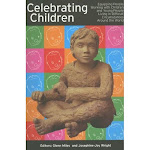
A statue which somehow captures the heart behind everything I do.

Tuesday, 20 November 2007

A Soft and Fluffy Jesus


I am a harsh critic of Sunday Schools or "Children's Church" as the terminology goes these days. It frustrates me. There are many elements including teaching, training of volunteers, the planned and unplanned curriculum and the investment in resources, which all frustrate me. However, I'm not going down that road today. Today I want to contemplate the warning bells which have been ringing in my mind recently. Those bells are bringing to surface my concern that in our Sunday schools or "Children's Church" today we are painting for our children a soft and fluffy Jesus. Even more concerning is the thought that we may be painting a soft and fluffy easy-reading bible which has become a book of helpful hints for Christian living. Do we white-wash our stories and leave them devoid of any unpleasant reality to make it more than digestible to our sensitive youngsters?
I grew up in the church with the stereotypical image of Jesus that plagues many non-christians today: He was a nice guy who loved everybody, did miracles and had great hair. While our children may be too young to understand the social, political and cultural implications of what Jesus did in great detail, neither must we lead them to underestimate just how radical his actions were.
It was only in my teenage years that I began to understand how radical he was. In a video interview my friend described Jesus as radical, "someone who always makes us think outside the box and challenges us to do things differently". In all my years of Sunday school I never thought of Jesus like that - I thought he was just a really nice, gentle, loving guy who died a gruesome death to save us from our sin. (This is not a debate on how graphic our projection of that death should be as our children grow up - that again is a discussion for another time.) Never did I realise then that his ministry and the life he lived as told in the gospels was every bit as radical as the death he died. I thought that he caused a little upset here and there but everyone loved him. Again, I didn't realise that he caused huge political and social shifts where-ever he went and was extremely unpopular for breaking social taboos and defying the political pressures of the time. My concern is that we bring up our children in the church, whether consciously or not, to put Jesus in to a nice fluffy box, portraying him as the guy that everybody loved and that in turn may cause them a struggle to unpack such images later in life.